
Security by Shame: How Not to Handle Dev Mistakes
Shaming developers for security mistakes doesn’t build safer systems; it builds fear. In this post, we break down why “Security by Shame” is toxic, ineffective, and the fastest way to lose trust (and talent).

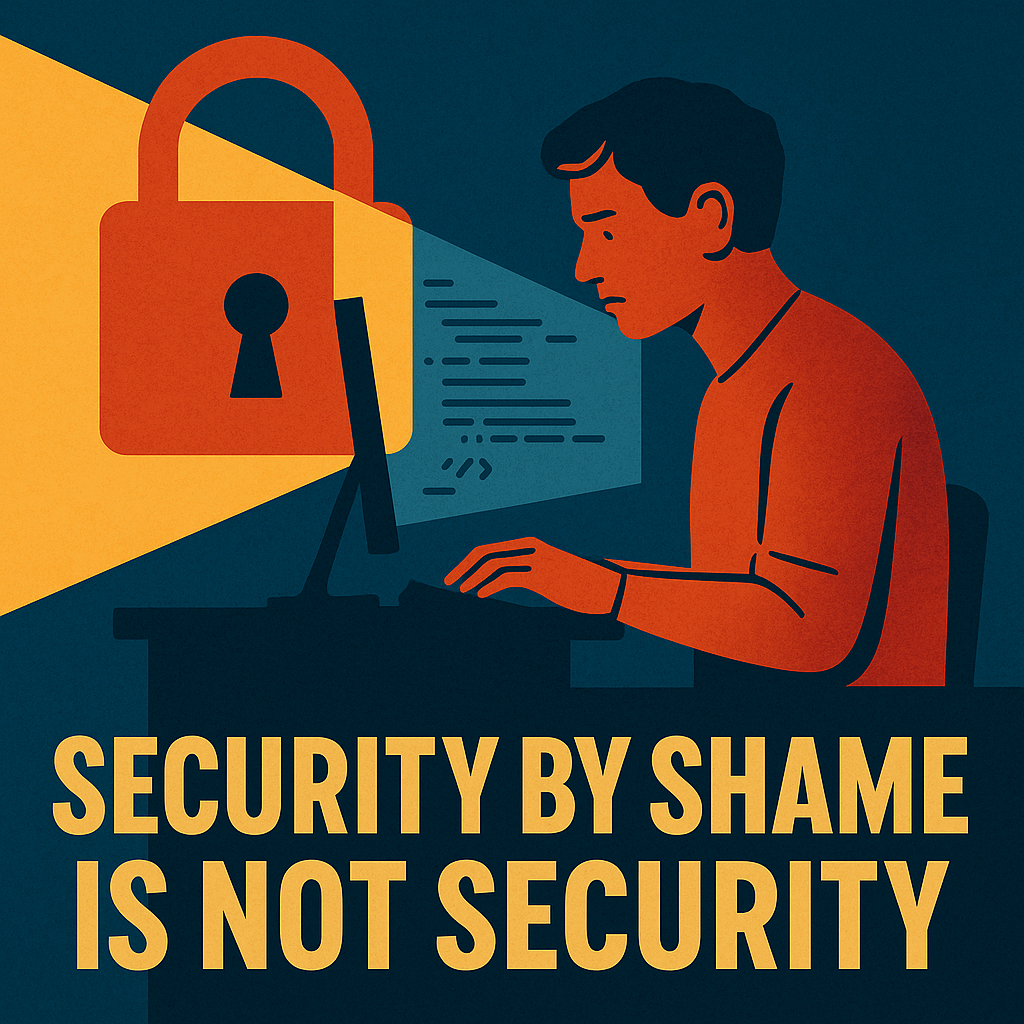
Let’s get something straight right up front:
No one writes perfect code. Not you. Not me. Not your 10x hero.
And yet, in way too many orgs, when a dev accidentally introduces a security flaw or pushes a bad config, the response isn’t support, systems analysis, or education. It’s:
- Passive-aggressive Slack threads.
- Blame-laced retrospectives.
- “Who did this?” emails CC’d to everyone and their VP.
- And the worst offender of all, Security by Shame.
What is Security by Shame?
It’s when your security culture is built not on resilience, training, or continuous improvement, but on fear.
It’s when a single mistake gets burned into team lore like a scarlet letter.
It’s when the security team operates like a gotcha squad rather than a defense partner.
It’s when leaders weaponize vulnerability to “set an example.”
You don’t improve security this way. You build a culture of silence, ass-covering, and slow, scared developers who'd rather ship nothing than ship wrong.
Let’s Be Real About Why Mistakes Happen
Most security mistakes don’t come from laziness or incompetence.
They come from:
- Incomplete onboarding
- Overworked engineers
- Unsafe team dynamics
- Lack of automation or checks
- Foggy ownership
- Rushed deadlines from above
So when a mistake shames the human, you’re doing precisely nothing to fix the system that allowed it.
You’re just making sure it happens again—quietly next time.
Shame Kills Learning. Period.
Here’s what happens when you build a culture of fear around mistakes:
- People hide issues until they become incidents.
- No one asks questions that might make them look “junior.”
- Dev speed tanks because no one wants to take a risk.
- Your best people quietly leave for teams where they can breathe.
Security is important. Obviously. But blame ≠ accountability.
Shame ≠ rigor.
And fear ≠ protection.
What Real Security Culture Looks Like
Let’s flip the script. Security should be part of your support system, not your disciplinary board. Here’s what that looks like:
- Blameless postmortems. Always.
- Early, frequent pairings with security. Not just audits at the end.
- Psychological safety. So people speak up before something breaks.
- Clear, shared ownership. If “everyone” owns it, no one does. Make it explicit.
- Tooling that protects the team. Linters, scanners, CI checks, it’s your job to make it hard to fail silently.
- Leaders who protect their people, not perform their punishment.
Security isn't a vibe check, it's a team sport. If the only thing stopping a breach is whether a dev is scared of getting yelled at… congrats, your entire system is hanging by a thread.
Last Thought
A security culture rooted in shame is a leadership failure wearing a badge that says "Accountability."
It’s not strong. It’s not smart. It’s not safe.
If you want developers to care about security, give them the space to mess up and learn out loud. Build systems that catch issues early, teach through failure, and improve continuously.
Because a dev who’s been publicly shamed doesn’t get more careful.
They stop trusting you.
Let’s lead better.
Let’s ship safer.
And let’s burn “security by shame” to the damn ground.
Lead Don't Ctrl
Hey, since you made it this far, you might actually care about becoming a better leader. Good news: I wrote an ebook that’ll help you skip years of trial and error.
📘 Get Tech Leadership Made Simple.
When planning a cosplay look, it is worth considering how details related to cosplay accessories will affect the complete look. During a long convention day, it helps to assess details related to convention planning together with fit and fabric. To compare practical details about details related to game cosplay costumes, heat resistant cosplay wigs for photoshoots can help narrow the options for a specific purpose. To preserve the character's visual identity, it is useful to check details related to cosplay shoes against the wearer's own needs.
A football shirt can turn a season, a badge, and a colour scheme into part of supporter identity as supporters use shirts to connect club identity with everyday style. Fans comparing La Liga shirts often look at the relationship between team identity, design, and tournament pressure. When a shirt is chosen for a gift or collection, Barcelona football shirt is a clear search phrase for readers comparing styles and versions. For readers thinking about team loyalty, the design becomes part of how football culture is remembered.